Blog
Bosch MD1CS003 on the 1.5 BlueHDi: what to check before you touch the File
The Bosch MD1CS003 in Peugeot, Citroën, DS, Opel and Toyota 1.5 BlueHDi diesels: which cars, locked units, AdBlue faults and what to check first.
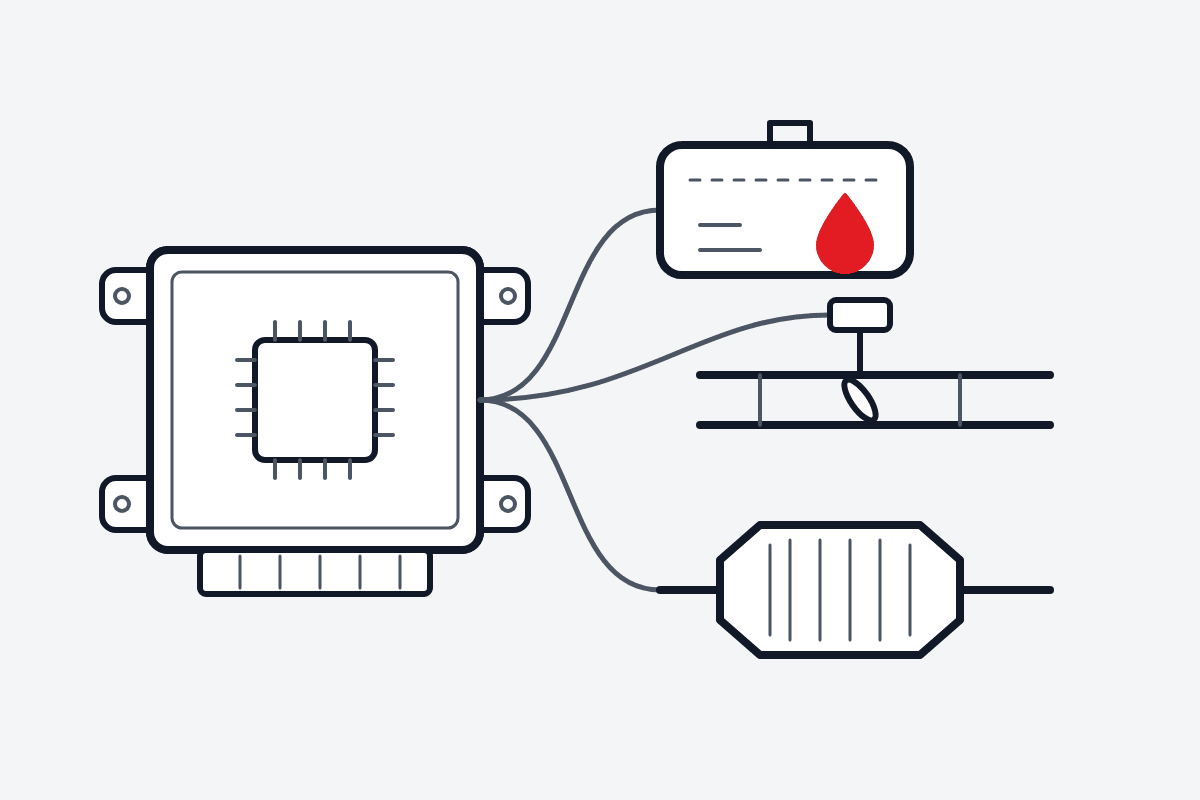
Of all the control units tuners upload to FILHEX, the Bosch MD1CS003 comes up more often than any other. That is no surprise. It runs the 1.5 BlueHDi, the small diesel that Stellantis has put in almost every car and van it builds, so a lot of them arrive in workshops, most of them with an AdBlue warning on the dash.
This guide is about that ECU in particular: which vehicles carry it, why a read can go wrong before you have even opened the File, which faults bring the car in, and what the Files we see for it are actually asked to do.
Which vehicles carry the MD1CS003
The MD1CS003 is the engine control unit for the 1.5 BlueHDi (DV5 family, engine codes DV5RC / DV5RD and relatives), from around 2018 onwards, in 100 hp and 130 hp versions. It replaced the older 1.6 BlueHDi in most of the range.
You will find it in:
- Peugeot: 208, 2008, 308, 3008, 5008, 508, Partner, Rifter, Expert, Traveller
- Citroën: C3, C3 Aircross, C4 / C4 Cactus, C5 Aircross, Berlingo, Jumpy, SpaceTourer
- DS: DS 3 Crossback, DS 4, DS 7
- Opel / Vauxhall: Corsa, Astra, Crossland, Grandland, Combo, Vivaro and the other platform-shared models
- Toyota: Proace and Proace City (the PSA-built vans)
Because the same ECU sits under five Brands, the Brand on the badge tells you little. Trust the label on the unit and the software in the dump, not the logo on the bonnet. Bosch part numbers on the label (0281 03x xxx) and the PSA reference vary between model years, and two cars of the same model can carry different software versions.
Before the read: is this unit locked?
The MD1CS003 is built on a modern Infineon TriCore controller, and Bosch tightened read protection on these units around 2020. In practice the field splits three ways:
- Earlier or unlocked units read and write on the bench without drama.
- Locked units refuse a normal bench read. They need a boot-mode unlock first (often called a glitch unlock), or a mail-in unlock from your tool supplier. After that, bench read and write work as usual.
- OBD access depends on your tool and the software version. Many workshops simply go to the bench for this ECU from the start.
Two rules save most of the pain:
- Check the lock status for your exact hardware and software before you book the job, not with the car on the lift. Tool support lists change often for this family.
- Make a full backup, flash and EEPROM / data flash, before you write anything. If an unlock or a write goes wrong, the original read is the only thing that gets the car back on the road.
What brings the car in
AdBlue: the countdown
The most common complaint on a 1.5 BlueHDi is the SCR warning: "AdBlue fault: starting impossible in 1,100 km" or similar, with the counter going down a little on every trip. Typical codes are in the P20E8 (low reductant pressure), P20EE (SCR efficiency) and P204F families.
On this engine the cause is very often the AdBlue tank assembly. The pump, the heater and the level and pressure sensors are built into the tank, and a failure of any part means a new tank. It is a known weak point; Stellantis has extended cover for the tank in some markets. So:
- Check the warranty and goodwill position first. If the car is young enough, the right repair may be a free tank at the dealer.
- Then diagnose properly: pump pressure, heater circuit, wiring and connectors at the tank, and the quality of the AdBlue itself (crystallised or diluted fluid causes many of these faults).
- Remember where the countdown lives. As on other Bosch diesels, the start-lock status is stored in the ECU's data memory, not only in the fault list. Clearing codes does not stop the counter. We explain why in Fixing the AdBlue restart lock on Bosch EDC17; the same logic applies here.
The timing chain: rule it out first
The 1.5 BlueHDi has a well-known camshaft timing chain problem. On many engines built between about 2017 and early 2023 the chain stretches, and a stretched chain shows up as rattling from the top of the engine, cam and crank correlation faults, rough starts and, in the worst case, a broken chain. Stellantis has launched an updated chain kit and extended warranty cover for it.
This matters for anyone working on the File. A car that runs badly because of chain stretch will run badly after any calibration change too, and the new File will get the blame. Ask whether the chain update has been done, and listen to the engine before you start. Correlation codes in the fault memory are a reason to stop and look at the mechanics, not to reach for software.
EGR and DPF: the short-trip engine
These cars do a lot of town driving: small hatchbacks, delivery vans, school runs. Short trips are exactly what EGR valves and particulate filters handle worst. Carbon in the EGR valve and intake, regenerations that never finish, and soot loading warnings are everyday work. See Why faults come back after DPF or EGR removal for the follow-up problems workshops meet most often.
What the Files we see ask for
Looking at the MD1CS003 Files processed in FILHEX, a clear pattern shows:
- AdBlue / SCR is on about three in every four of them.
- EGR and DPF are almost always requested along with it. The typical MD1CS003 job is the three emission Solutions together, on one File.
- Stage 1 is much rarer here than on other diesels. This is a repair ECU first and a performance ECU second: people bring these cars in because the warning light came on, not to gain power.
The same is true of the other small diesels high on our list (the Marelli MJD9DF in the 1.3 Multijet, the Bosch EDC17C74 in Volkswagen Group TDI engines): the emission Solutions dominate.
On FILHEX this has a practical effect: every Solution on one File costs 1 Credit, so the combined AdBlue + EGR + DPF job costs the same as a single Solution. Scan is free and shows which Solutions are available for the software in front of you before you spend anything.
A checklist for an MD1CS003 job
- Diagnose the car first. Tank, chain, sensors, wiring. Software does not fix a dead pump or a stretched chain.
- Check the lock status for your hardware and software version, and plan bench or OBD access accordingly.
- Make a full backup of flash and data memory and keep the untouched original read.
- Upload the original File in the FILHEX Windows app and run File scan. It identifies Brand and ECU from the binary and lists the Solutions available for that software version, without spending a Credit.
- Pick the Solutions (for example AdBlue / SCR Removal, EGR Removal and DPF Removal together) and process: 1 Credit when the Solution Job completes. If a Solution Job fails, its Credit returns to your wallet automatically.
- Reset the SCR and DPF adaptations with your diagnostic tool where the platform needs it, write the result File, and clear faults. DTC Clear is free on a completed result File, up to three times.
- Road-test and log. Check that no new codes appear after a few drive cycles and a full ignition-off sleep.
Legal and use context
Disabling emissions equipment on vehicles used on public roads is restricted or illegal in many jurisdictions, including most European countries. Treat AdBlue / SCR, EGR and DPF Removal as professional Solutions for cases where local law and the vehicle's use allow it, and keep hardware, diagnostics and roadworthiness decisions with the workshop.
New to FILHEX? Install the Windows app and create a Workspace to get 3 free Credits for your first Files.
Continue: MD1CS003 on Peugeot · MD1CS003 on Citroën · AdBlue / SCR Removal · EGR Removal · DPF Removal · Pricing
Continue: Bosch MD1CS003 Solutions · all posts